
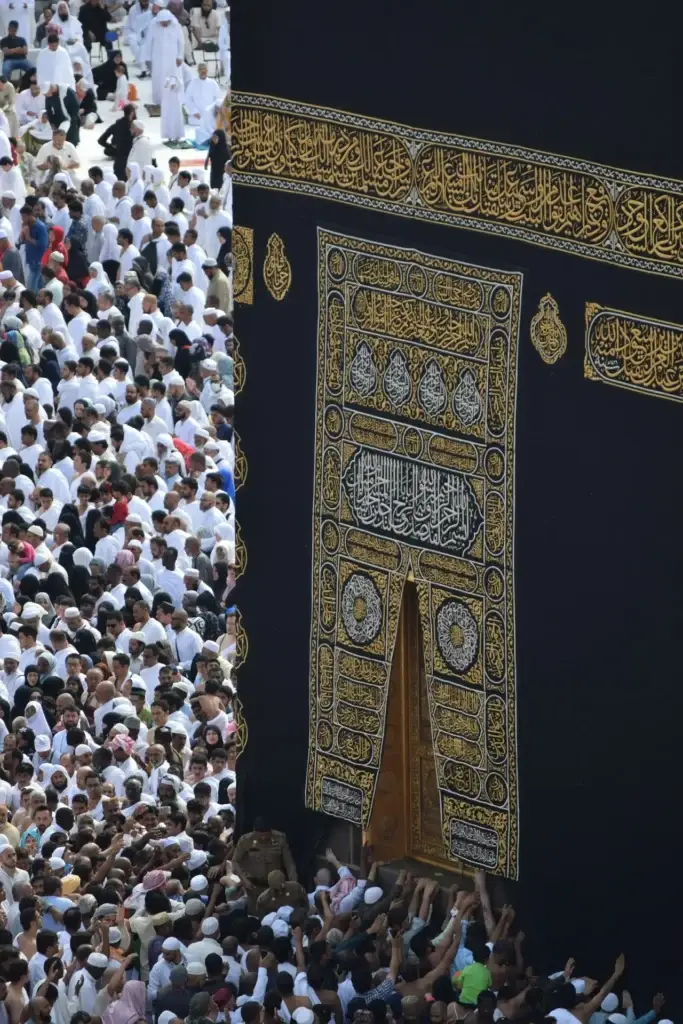
Umrah is short in time but deep in meaning. In just a few hours a pilgrim enters ihram, circles the Kaaba, walks between Safa and Marwah and leaves the state of ihram renewed. Knowing each step before you travel lets you focus on worship instead of worrying about what comes next.
This step-by-step guide is written for pilgrims travelling from the UK, including where to enter ihram on a flight from Britain. It follows the widely taught practice; for detailed rulings on your own situation, please consult a trusted scholar.
The four pillars of Umrah in brief
- Ihram – entering the sacred state with the intention of Umrah, before crossing the miqat
- Tawaf – seven circuits around the Kaaba
- Sa’i – seven laps between the hills of Safa and Marwah
- Halq or Taqsir – shaving or shortening the hair to leave ihram
Step 1: Prepare for ihram
Before putting on ihram, it is sunnah to take a bath (ghusl), trim nails and remove unwanted hair, and for men to apply perfume to the body (not to the ihram cloth). Many UK pilgrims do this at home or at the airport before the flight.
- Men wear two plain, unstitched white sheets: one wrapped around the waist (izar) and one over the shoulders (rida), with sandals that leave the ankles uncovered.
- Women wear modest, loose everyday clothing of any colour that covers the body, without a face veil (niqab) or gloves.
Step 2: Make your intention at the miqat
The miqat is the boundary that pilgrims must not cross for Umrah without being in ihram. How this works for UK pilgrims depends on your route:
- Flying straight to Jeddah for Makkah: your flight crosses the miqat before landing. Put on ihram before boarding or on the plane, and make your intention when the crew announces the miqat (usually around 30–45 minutes before landing). Do not wait until you land in Jeddah.
- Going to Madinah first: no ihram is needed on the flight. When you travel from Madinah to Makkah, enter ihram at the Madinah miqat, Dhul Hulayfah (Abyar Ali).
Make the intention in your heart and say: Labbayk Allahumma Umrah (“Here I am, O Allah, for Umrah”). Then begin reciting the Talbiyah often until you start Tawaf:
Labbayk Allahumma labbayk, labbayka la sharika laka labbayk. Innal-hamda wan-ni’mata laka wal-mulk, la sharika lak.
Step 3: Respect the restrictions of ihram
Once in ihram, avoid: cutting hair or nails, using perfume or scented products, covering the head (men) or the face with a niqab and wearing gloves (women), wearing stitched clothing (men), hunting, marital relations, and arguing or bad behaviour. Use unscented soap and toiletries throughout.
Step 4: Enter the Masjid al-Haram
Make sure you have your Umrah permit booked on the Nusuk app. Enter with your right foot, recite the dua for entering the mosque, and when you first see the Kaaba take a moment to make dua; it is a moment many pilgrims never forget.
Step 5: Perform Tawaf
- Be in a state of wudu.
- Men uncover the right shoulder (idtiba) for the Tawaf of Umrah.
- Start at the line in line with the Black Stone (Hajar al-Aswad). Face it, raise your right hand and say Bismillah, Allahu Akbar. Kissing or touching the stone is sunnah if possible, but in the crowds a gesture from a distance is enough.
- Walk anticlockwise around the Kaaba, keeping it on your left, for seven circuits. Men walk briskly (ramal) in the first three circuits if they can.
- Between the Yemeni corner and the Black Stone, recite: Rabbana atina fid-dunya hasanah, wa fil-akhirati hasanah, wa qina adhaban-nar.
- There is no fixed dua for each circuit; make dua in any language from the heart.
After Tawaf, men cover the right shoulder again, pray two rak’ahs behind Maqam Ibrahim if space allows (anywhere in the mosque is fine in crowds), and drink Zamzam water.
Step 6: Perform Sa’i between Safa and Marwah
- Go to the hill of Safa, face the Kaaba, raise your hands and make dua.
- Walk to Marwah: that is one lap. Marwah back to Safa is the second lap.
- Complete seven laps, ending at Marwah.
- Men jog lightly between the green lights; women walk at a normal pace.
The Sa’i area is fully air-conditioned and wheelchair lanes are available for elderly pilgrims and those with limited mobility.
Step 7: Shave or shorten the hair
Men either shave the head (halq), which is more rewarding, or shorten the hair evenly all over (taqsir). Women gather their hair and cut about a fingertip’s length from the ends. With this, your Umrah is complete and the restrictions of ihram are lifted. Alhamdulillah.
Perform your Umrah with peace of mind
Our packages include return flights from the UK, Umrah visa, hotels near the Haram, transfers and guided Ziyarat. Flight tickets are issued under ATOL protection.
Common mistakes to avoid
- Crossing the miqat on the plane without being in ihram
- Starting Tawaf before the Black Stone line or counting circuits incorrectly (use a counter or tasbih)
- Pushing to touch the Black Stone in heavy crowds
- Using scented wet wipes or toiletries in ihram
- Forgetting to book the Umrah permit and Rawdah slot on Nusuk
After Umrah: visiting Madinah
Most UK packages include several nights in Madinah to pray in Masjid an-Nabawi, send salaam to the Prophet ﷺ and visit Quba Mosque, Uhud and other historic sites. Read our guide to the Rawdah rules and how to book your slot, and our Umrah packing checklist.
Frequently Asked Questions
How long does it take to perform Umrah?
Tawaf and Sa’i usually take between two and four hours in total, depending on crowds. Many pilgrims choose late night or mid-morning when the Haram is calmer.
Where do I put on ihram when flying from the UK?
If you fly directly to Jeddah for Makkah, enter ihram before or during the flight and make your intention before the plane crosses the miqat. If you go to Madinah first, enter ihram at Dhul Hulayfah when travelling to Makkah.
Can women perform Umrah during menstruation?
A woman can enter ihram and make her intention, but she should not perform Tawaf until her period ends. She can then complete Tawaf and Sa’i. Plan dates with this in mind and consult a scholar for specific situations.
Do I need a permit to perform Umrah?
Yes. Every pilgrim needs an Umrah permit booked through the official Nusuk app, whatever visa they travel on.
Can I perform Umrah on behalf of someone else?
Yes, you can perform Umrah on behalf of a deceased person or someone unable to travel, provided you have already performed your own Umrah.